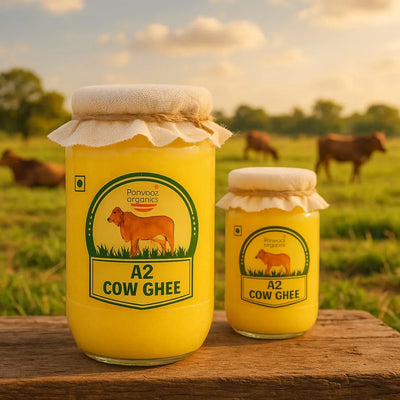
A2 Ghee vs Regular Ghee — Which Is Better for Your Family?
What Is Happening in Your Body
When you consume dairy products, your body processes different types of milk protein. The critical difference between A2 and regular ghee lies in beta-casein — a protein that directly affects how your body digests and absorbs dairy.
A2 cows (indigenous breeds like Gir, Sahiwal, Red Sindhi) produce milk with only the A2 variant of beta-casein. Regular commercial cows (Holstein, Jersey) produce milk with the A1 variant.
When A1 beta-casein is digested, it releases BCM-7 — a peptide linked to digestive discomfort, gut inflammation, and slower nutrient absorption. A2 ghee is completely free of this problematic protein.
Symptoms of A1 Dairy Sensitivity
- Bloating and gas after consuming dairy products
- Stomach cramps or discomfort after drinking milk
- Irregular digestion with dairy-containing meals
- Skin breakouts linked to dairy consumption
- Feeling heavy after eating foods cooked in regular ghee
- Mild inflammation symptoms — joint stiffness, nasal congestion
Many Indians who experience these symptoms assume they're lactose intolerant. In reality, it's often A1 protein sensitivity — which is far more common and easily solved by switching to A2 dairy.
Why A2 Ghee Is Nutritionally Superior
- Higher levels of CLA (Conjugated Linoleic Acid) — supports metabolism and fat burning
- More butyric acid — feeds beneficial gut bacteria and reduces intestinal inflammation
- Better omega-3 to omega-6 ratio — more anti-inflammatory profile
- Rich in fat-soluble vitamins A, D, E, and K2
- Easier absorption — nutrients from A2 dairy are more bioavailable
How to Identify Genuine A2 Ghee
- Check for breed certification — the label should mention specific indigenous breeds (Gir, Sahiwal, Red Sindhi, Tharparkar)
- Look for bilona/hand-churned process — traditional method preserves nutrients that industrial processing destroys
- Smell and texture — genuine A2 ghee has a stronger, nuttier aroma and grainy texture when solidified
- Lab testing — reputable brands provide A2 protein certification
- FSSAI certification is non-negotiable for safety
Daily Usage Guide
- Cook your morning breakfast in A2 ghee instead of refined oil
- Add a teaspoon to hot dal, khichdi, or rice
- Apply on roti straight from the tawa
- Use in traditional preparations like halwa and ladoo
- Take 1 teaspoon with warm water on an empty stomach for gut health
What to Choose and What to Avoid
| ✅ Choose This | ❌ Avoid This |
|---|---|
| A2 ghee from indigenous breeds | Regular ghee from commercial dairy |
| Bilona/hand-churned process | Industrially processed ghee |
| Lab-certified A2 protein ghee | Ghee without breed specification |
| A2 ghee for cooking (up to 1 tbsp/day) | Refined vegetable oils for daily cooking |
Frequently Asked Questions
Is A2 ghee safe for people with high cholesterol?
Research shows that A2 ghee in moderation (1 tablespoon/day) does not raise bad cholesterol. The CLA in A2 ghee may actually support healthy cholesterol ratios. Always consult your doctor if you have existing heart conditions.
Can babies and children have A2 ghee?
Yes — A2 ghee is traditionally given to babies from 6 months in Indian households. It's easier to digest than regular dairy and provides essential fats for brain development.
Why is A2 ghee more expensive than regular ghee?
Indigenous cow breeds produce less milk than commercial breeds, and the bilona churning process yields less ghee than industrial methods. You're paying for quality, not quantity — and the health benefits compound over months.
What Should You Do Next?
Three simple next steps to put what you just read into practice.
New to Parwaaz?
Start with our Real Food Starter Ritual.
Made for families who want to begin preventive wellness with simple daily foods.