
A2 Milk and Ghee Research
The A1/A2 Protein Distinction All dairy contains a protein called beta-casein, but there are two genetic variants: A1 and A2. Modern high-yield dairy breeds (Holstein, Jersey) predominantly produce A1 beta-casein....
The A1/A2 Protein Distinction
All dairy contains a protein called beta-casein, but there are two genetic variants: A1 and A2. Modern high-yield dairy breeds (Holstein, Jersey) predominantly produce A1 beta-casein. Indian desi cows (Gir, Sahiwal, Red Sindhi) and some heritage breeds produce A2 beta-casein. When A1 casein is digested, it releases a peptide called BCM-7 (beta-casomorphin-7); A2 casein does not.
What BCM-7 Does
BCM-7 is an opioid peptide that binds to opioid receptors in the gut and, in some individuals, crosses the intestinal barrier. Proposed effects include:
- Slowed gut motility (constipation, bloating)
- Increased intestinal permeability ("leaky gut")
- Increased mucus production in airways
- Immune modulation via gut-associated lymphoid tissue
A 2019 double-blind crossover RCT in the European Journal of Clinical Nutrition found that A1 milk consumption was associated with significantly higher gastrointestinal inflammatory markers, lower cognitive processing speed, and worse digestive symptoms compared to A2 milk in the same subjects — effects not seen when the same individuals consumed A2 milk.
Source: Ho et al., European Journal of Clinical Nutrition 2019.
The Ghee Distinction
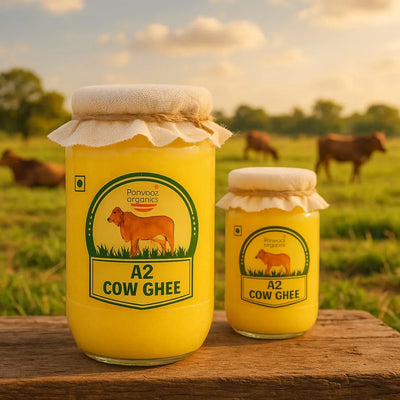
When ghee is made from A2 milk, the problematic BCM-7 peptide is absent throughout the process. Additionally, A2 bilona ghee from grass-fed desi cows contains significantly higher concentrations of butyric acid, CLA, and fat-soluble vitamins (particularly K2) than commercially produced ghee. The difference is not just in the milk — the bilona hand-churning process preserves heat-sensitive compounds that industrial centrifuge processing destroys.
Current Research Limitations
The A1/A2 research is promising but not conclusive at scale. Most RCTs are relatively small (50–200 participants). The effect appears strongest in individuals with pre-existing dairy sensitivity who have attributed their symptoms to lactose intolerance — many of whom may actually be reacting to A1 casein, not lactose. A2 milk is often tolerated well by these individuals. Larger long-term trials are ongoing.
Shop This Topic

New to Parwaaz?
Start with our Real Food Starter Ritual.
Made for families who want to begin preventive wellness with simple daily foods.

Continue Exploring