
A2 Bilona Ghee Guide
What Makes A2 Bilona Ghee Different Most ghee sold in India today is made from mixed-breed cow milk using a machine centrifuge process. A2 Bilona ghee starts with a fundamentally...
What Makes A2 Bilona Ghee Different
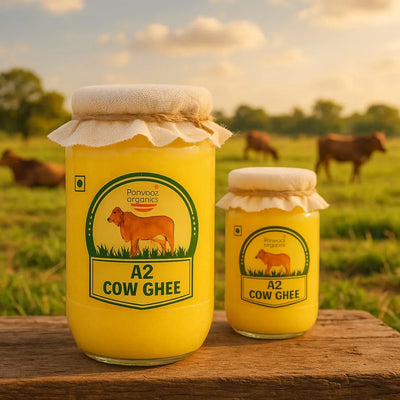
Most ghee sold in India today is made from mixed-breed cow milk using a machine centrifuge process. A2 Bilona ghee starts with a fundamentally different milk — from indigenous desi cows (Gir, Sahiwal, Red Sindhi) that produce only the A2 beta-casein protein, unlike the A1 protein found in most commercial dairy. The bilona method then churns curd by hand, a centuries-old process that preserves heat-sensitive nutrients that industrial processing destroys.
The Nutritional Difference
A2 Bilona ghee contains significantly higher concentrations of:
- CLA (conjugated linoleic acid) — associated with reduced inflammation and improved fat metabolism
- Butyric acid — the primary fuel source for colonocytes (gut lining cells); critical for gut barrier integrity
- Fat-soluble vitamins A, D, E, K2 — including K2 (menaquinone), which is rare in most diets and essential for directing calcium to bones rather than arteries
- Omega-3 fatty acids — particularly when the cows are grass-fed on natural pasture
A 2021 study published in Nutrients found that A2 milk-derived dairy products showed significantly lower inflammatory markers (IL-6, TNF-α) in human subjects compared to A1 equivalents — a difference attributed to the absence of BCM-7, an opioid peptide released when A1 casein is digested.
Source: Human RCT, Nutrients journal 2021.
How to Use It Daily
- 1 tsp in morning dal or sabzi — fat-soluble vitamins require dietary fat for absorption; the ghee delivers both
- On rotis instead of refined oil — ghee's high smoke point (250°C) makes it far safer for cooking than most vegetable oils
- ½ tsp in warm water on an empty stomach — traditional Ayurvedic practice for gut lining support, now validated by butyric acid research
- For children — add to khichdi, dal rice, or porridge daily for brain development (ghee is the richest natural source of DHA precursors in the Indian diet)
How Much Per Day
1–2 teaspoons per day for adults is the evidence-supported range. More is not better — ghee is calorie-dense. The benefit comes from consistent daily use at this dose, not from larger amounts.
What to Look For on the Label
- "A2 milk from desi cow" — not just "desi ghee" which often means nothing specific
- "Bilona / hand-churned" process — machine ghee is cheaper but nutritionally inferior
- Grainy texture at room temperature — a sign of naturally crystallised butyric acid, not a quality defect
- Deep golden colour — from beta-carotene in grass-fed milk
Shop This Topic

New to Parwaaz?
Start with our Real Food Starter Ritual.
Made for families who want to begin preventive wellness with simple daily foods.
Continue Exploring